
AgiBot Lingxi X1 Communication Architecture and CAN FD Bus Load
Robot architecture
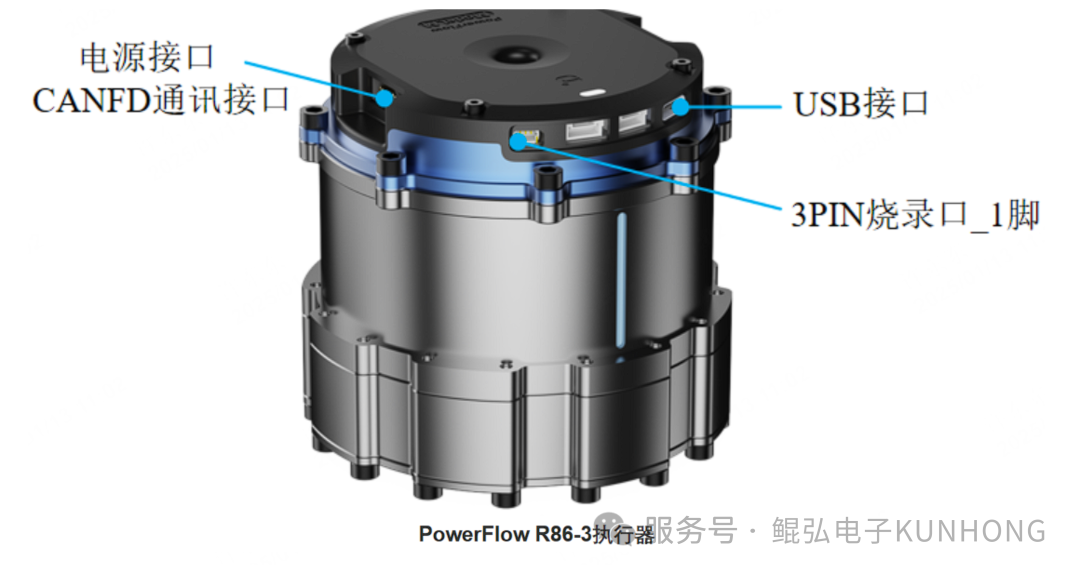
AgiBot's published Lingxi X1 configuration has 29 joints and two grippers, with an option for a three-degree-of-freedom head. The 29 joints use nine R86-2, six R86-3, ten R52 and four L28 actuators. AgiBot X1 development guide
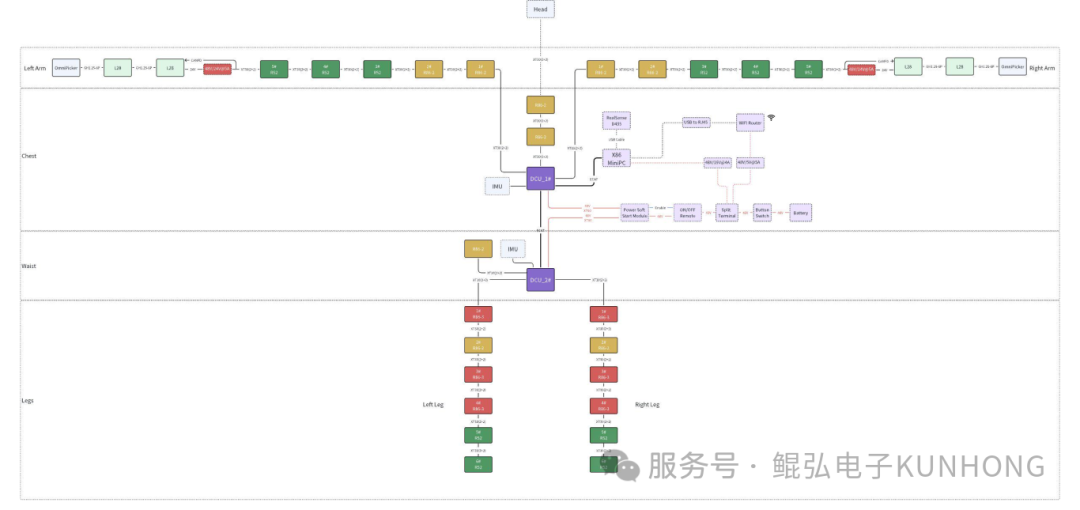
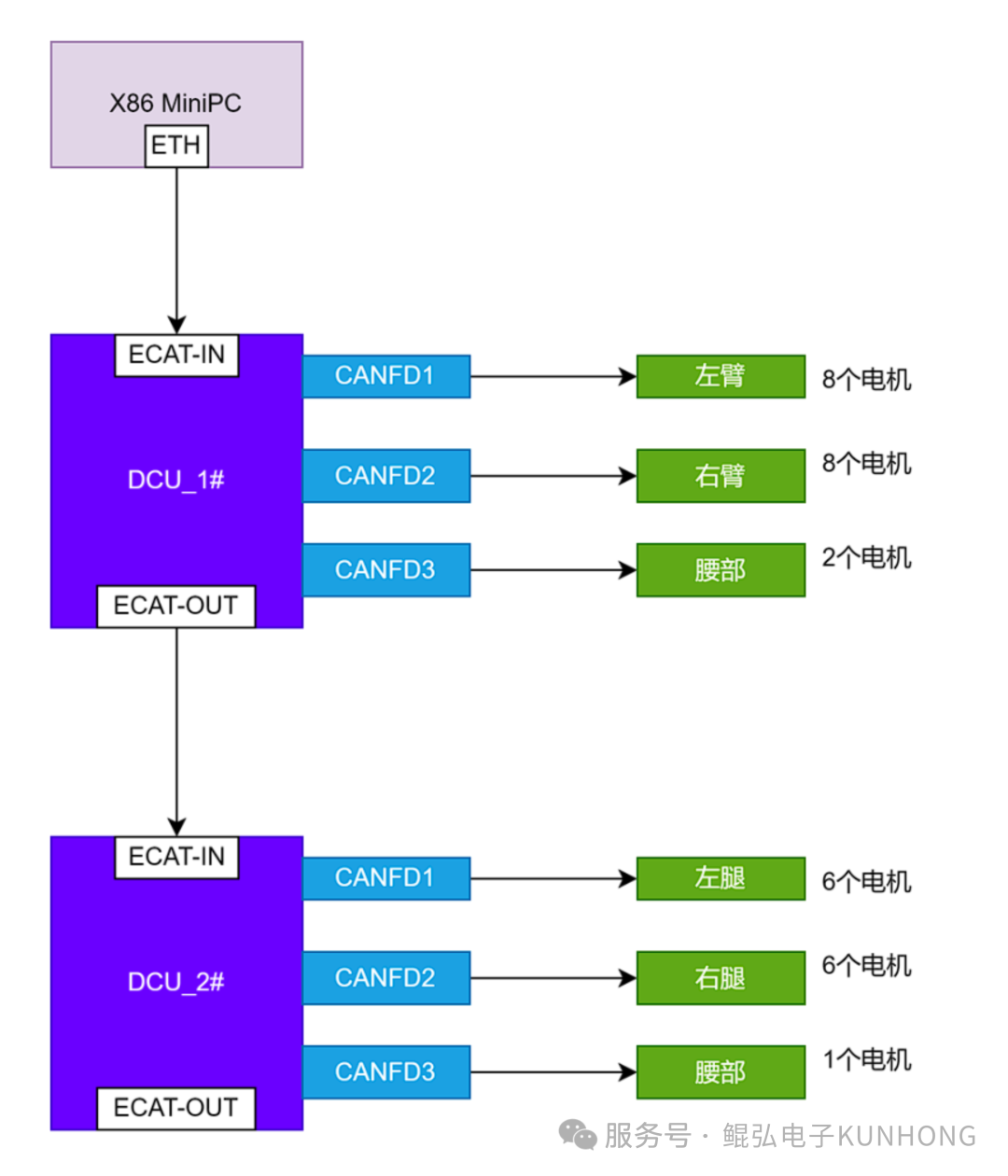
The Lingxi X1's x86 host connects to upper- and lower-body domain control units (DCUs) over EtherCAT. Each DCU provides three CAN FD buses, for six in total. For example, CTRL-1 on the upper-body DCU serves the left arm's five rotary joints, two linear actuators and gripper. The host exchanges data with the DCUs through EtherCAT PDOs, and the DCUs forward it to the actuator buses. AgiBot DCU driver documentation · DCU product manual
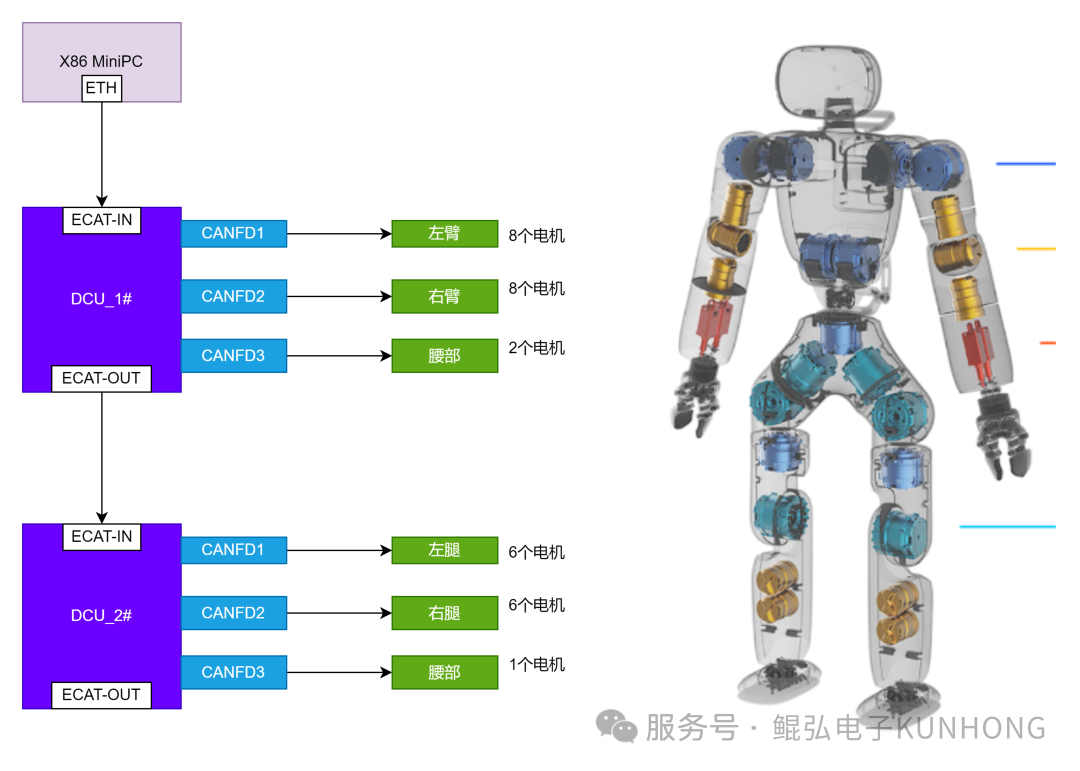
How the DCU forwards traffic
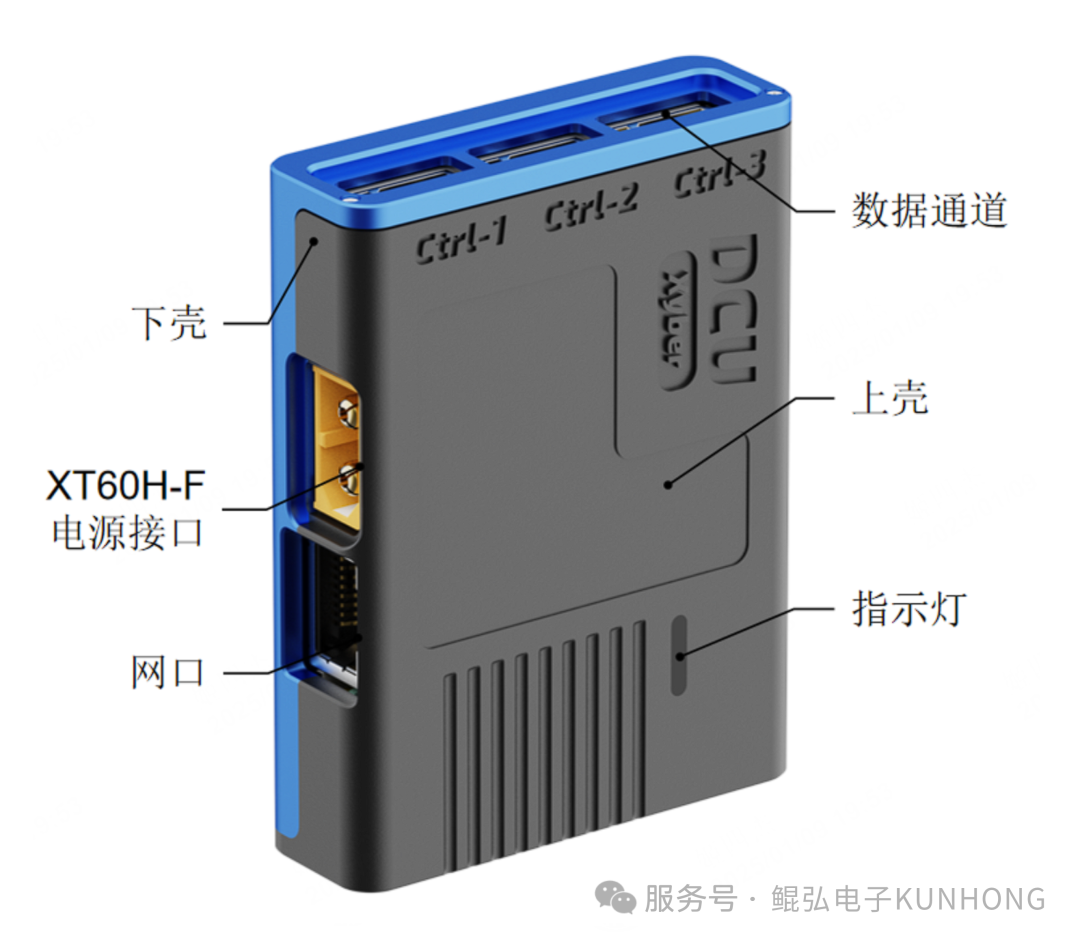
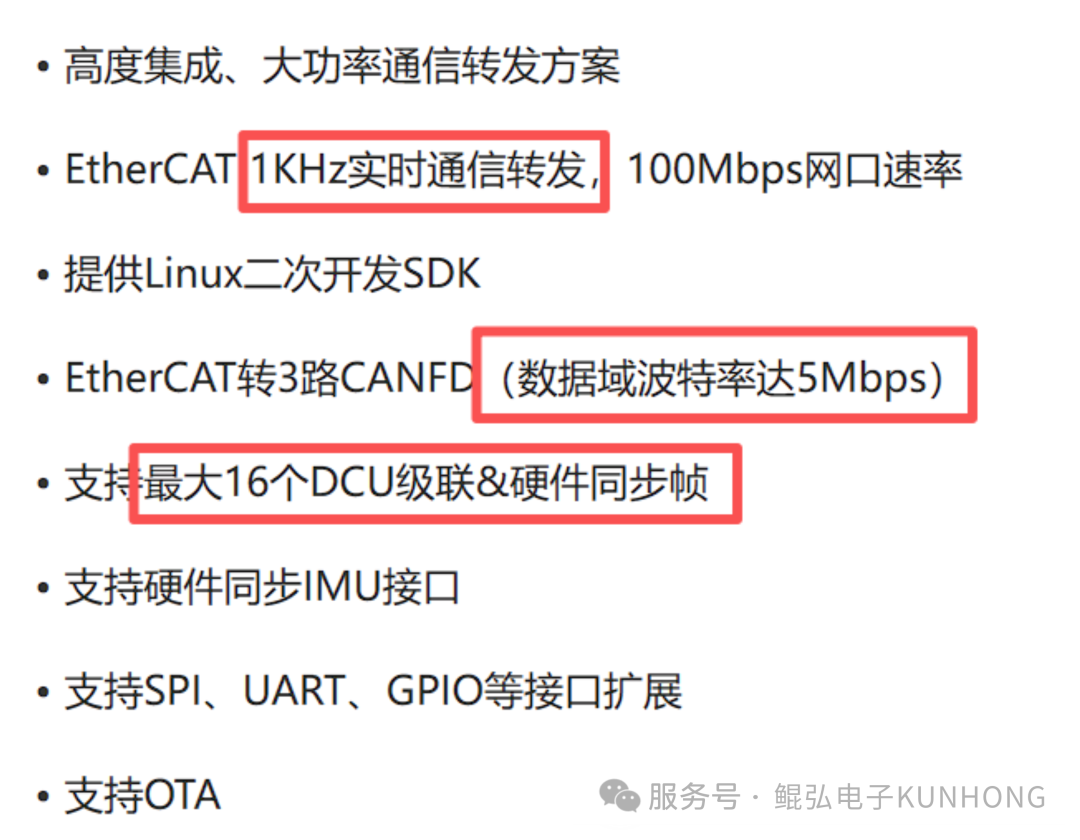
The host places control data and forwarding commands for individual channels in the EtherCAT PDO. The DCU separates the information for CTRL-1, CTRL-2 and CTRL-3 and produces CAN FD frames for each bus. It combines feedback in the upstream PDO. The DCU supports EtherCAT daisy chaining and distributed clock synchronization. The public configuration sets a 1 ms EtherCAT update period. DCU product manual · X1 DCU configuration
CAN FD settings and broadcast commands
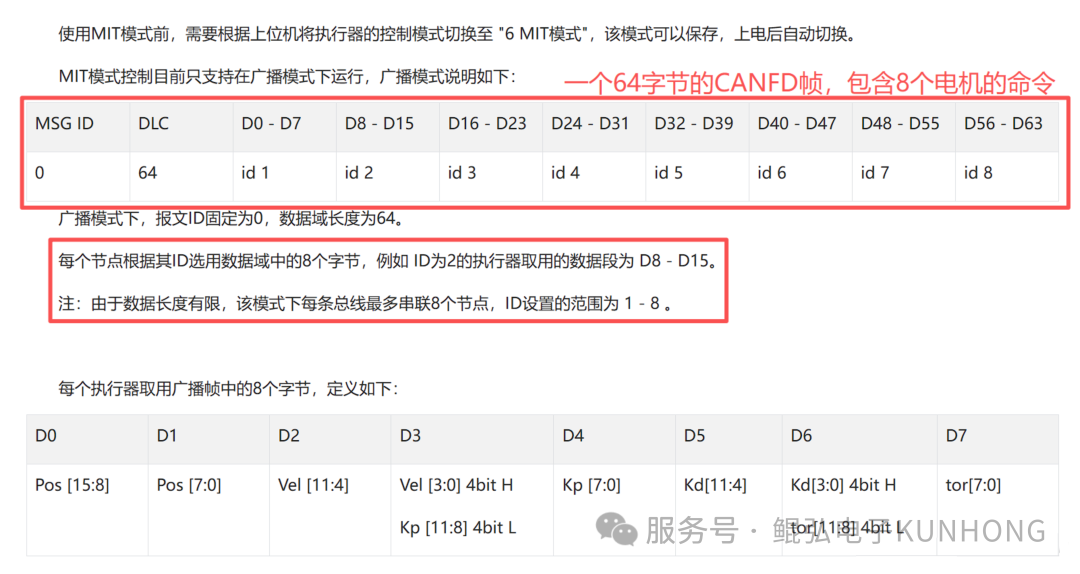
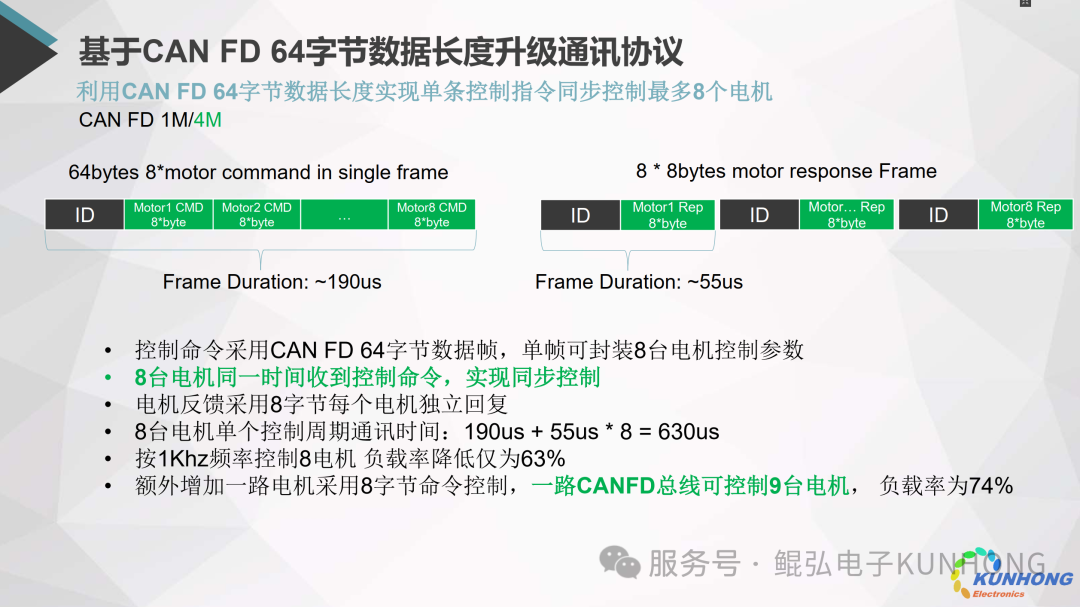
PowerFlow R actuators use 1 Mbit/s at an 80% nominal sample point and 5 Mbit/s at a 75% data sample point. In MIT mode, a broadcast uses CAN identifier 0 and a 64-byte payload. Each node reads its own eight-byte slot, so one frame can carry eight commands. Actuators return separate status frames after parsing the command. Putting commands in one frame reduces repeated arbitration and frame-tail overhead and delivers the commands to multiple nodes in the same frame. PowerFlow R actuator manual
With BRS enabled, arbitration and the frame tail still take nominal-rate bit time. Packing multiple commands into one data field reduces the frame overhead per command. The original article illustrates this with approximate figures at 1/4 Mbit/s. Eight short frames at about 55 µs each take roughly 440 µs, while one long frame takes about 190 µs. The ninth node in the illustration belongs to a separate-command example. The PowerFlow R broadcast has eight slots. The next section uses the X1 configuration at 1/5 Mbit/s.
Estimate occupancy in a 1 ms cycle
The public X1 configuration uses a 1 ms EtherCAT update period. Use 1 ms as the CAN FD budgeting period in this example, with eight nodes on one bus each returning one eight-byte status frame per cycle. Public X1 configuration
| Command layout | Transmit and receive per cycle | Frame rate | Estimated occupancy |
|---|---|---|---|
| 64-byte broadcast | 1 command + 8 status frames | 9,000 frames/s | About 55% |
| Separate command per node, for comparison | 8 commands + 8 status frames | 16,000 frames/s | About 80% |
The estimate uses standard CAN FD frames with BRS at 1/5 Mbit/s, approximately 50 µs for eight bytes and 146 µs for 64 bytes, including intermission. The broadcast case occupies about 146 + 8 × 50 = 546 µs per cycle. Separate commands are a comparison model for protocol overhead. Actual duration varies with identifiers, payloads and stuff bits. Leave room for other traffic, retries and node processing. Use the frame length and bus load guide to calculate with your own frames.
What to check during development
- Check both bit rates and sample points against the actuator manual. When adjusting timing, confirm the tool and controller expose the necessary settings. CAN/FD bit-rate calculator
- Check sustained transmit and receive performance against frame length, frame rate and occupancy on the busiest channel. Confirm the adapter reports the error states or error frames you need and works with your host software, such as SocketCAN or python-can. SocketCAN troubleshooting
- For an internal expansion, consider channel count, forwarding method, connector space and cable routing together. Compare CAN expansion interfaces · Kunhong's open-source EtherCAT-to-CAN FD project
Lingxi X1 resources
- Development and assembly guide
- Open hardware and mechanical design files
- Inference code · Training code
Originally published by Kunhong R&D on 2025-11-13 as AgiBot Lingxi X1 Communication Architecture.